How Indiana Weather Affects Parking Lot Striping
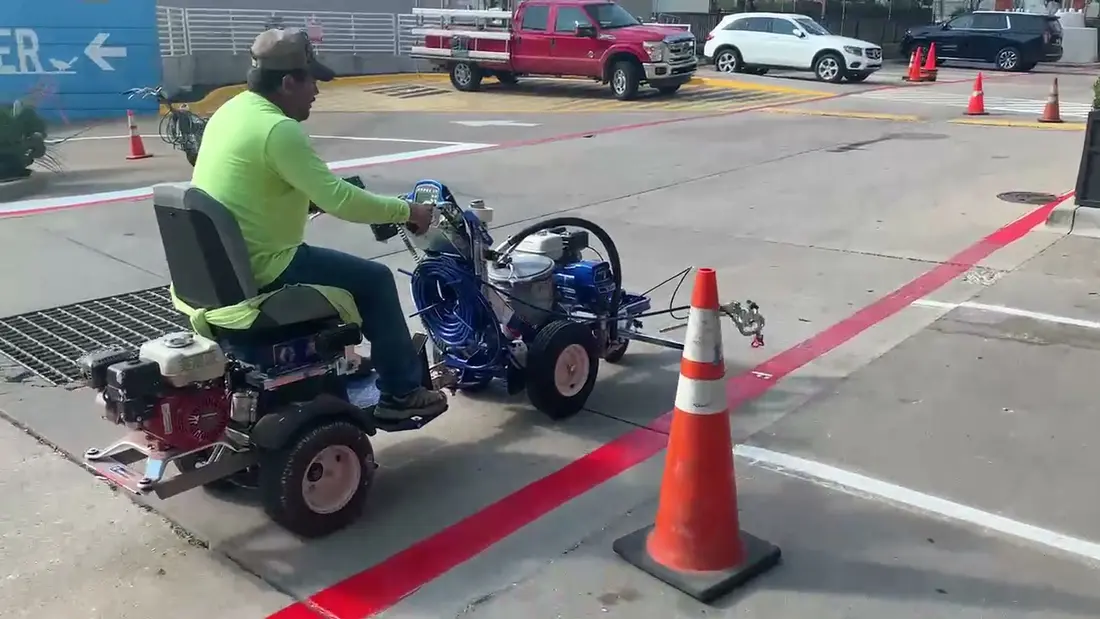
Fort Wayne pavement markings deal with winter, spring rain, summer heat, fall temperature swings, salt exposure, and plow blades. Timing matters.
Why Lines Fade Faster After Winter
Road salt dries on the surface, snowplows scrape close to curbs and islands, and freeze-thaw cycles open small pavement defects. By spring, front-row stalls, fire lanes, arrows, crosswalks, and ADA access aisles may look much lighter than they did in the fall.
Traffic wear is not even across a lot. Entrances, drive-thru lanes, dock approaches, school pickup areas, and tight turns take the heaviest abuse because tires twist across the paint instead of rolling straight over it.
Best Repaint Timing
Many Northeast Indiana properties inspect markings after winter cleanup and schedule repainting once pavement is dry and temperatures are stable. Sealcoated or resurfaced lots need enough cure time before striping, especially if cool nights or rain have slowed the process.
What Weather Changes On The Job
- Cool pavement slows drying and reopening.
- Humidity and shade can keep paint soft longer than expected.
- Standing water or salt residue can affect adhesion.
- Open lots may fade faster under sun, wind, and plow exposure.
- Warehouse and industrial traffic can wear stop bars and loading-zone markings faster than standard stalls.